


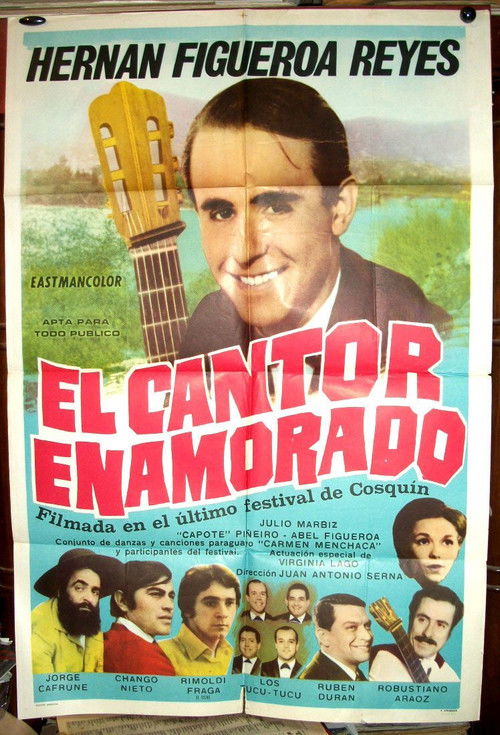
El cantor enamorado
El cantor enamorado暂无中文简介。
输入演员的中文名或英文名,先确认人物,再查看其参演电影(含配音,不含电视剧)。

暂无中文生平,以下显示来源原文。
Jorge Antonio Cafrune (Perico Del Carmen, Jujuy, August 8, 1937 – Buenos Aires, February 1, 1978) was one of the most popular Argentine folklorist singers of his time, as well as an unflagging researcher, compilator, and diffuser of the native culture. Jorge Cafrune was born in the estancia "La Matilde" of El Sunchal, Perico Del Carmen, Jujuy in a family of Syrian–Lebanese origin. He completed his secondary studies in San Salvador de Jujuy, during which he took guitar classes with Nicolás Lamadrid. In 1957 he recorded his first album with the band Las voces de Huayra that in 1960 changed its name to Los cantores del Alba, with Ariel Ramírez as manager. Beginning in 1962, Cafrune began to perform at the Cosquin Folkloric Festival. In 1966 in one of his visits to smaller villages, he met a young folklorist singer called José Larralde. In 1967 shown the trip "De caballo por mi patria" in homage to Chacho Peñaloza. During this trip Cafrune traveled about Argentina as had many gauchos, taking his art and message around the country. In 1977, after several years spent living in Spain, he returned to Argentina which was ruled at the time by the military dictatorship of Jorge Rafael Videla. The government saw a menace in Cafrune's outspoken music, particularly his politically controversial song Zamba de mi esperanza. On his persistence, Cafrune said, "Although it is not in the authorized repertoire, if my people request it of me, I am going to sing it." After being run over by a van driven by two nineteen-year-old men while riding a horse in a main road at 1 am, Cafrune died within twelve hours. Source: Article "Jorge Cafrune" from Wikipedia in English, licensed under CC-BY-SA 3.0.
人物资料来源:TMDB从参演电影片单按 TMDB 评分人数选取。
暂无中文简介。
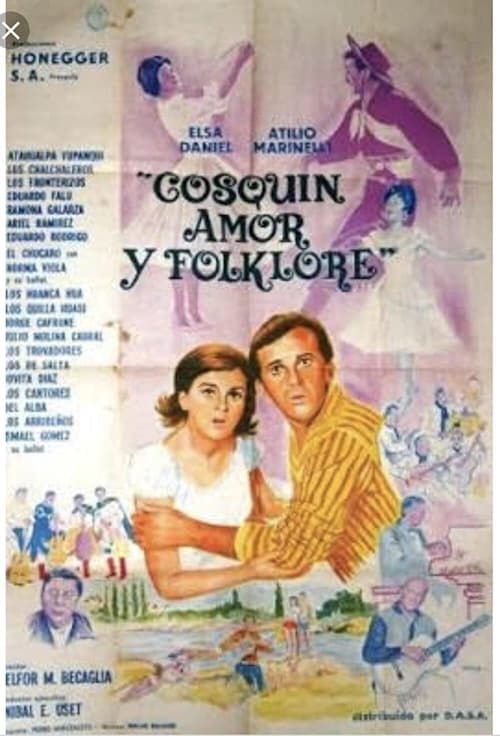
暂无中文简介。
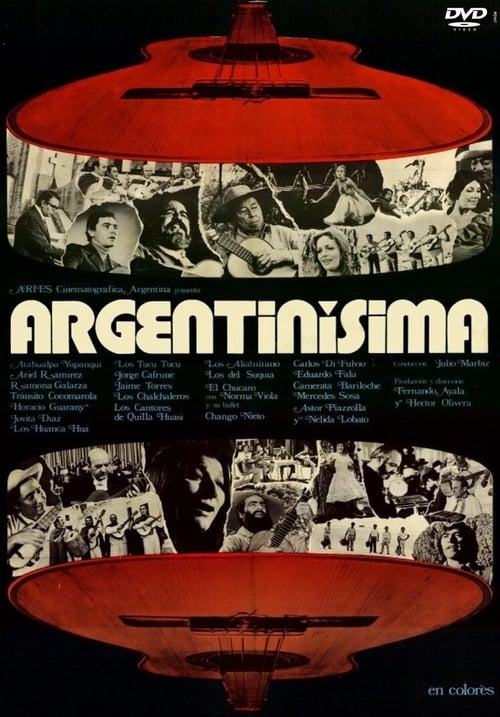
暂无中文简介。

暂无中文简介。