



Décryptage
Décryptage暂无中文简介。
输入演员的中文名或英文名,先确认人物,再查看其参演电影(含配音,不含电视剧)。

暂无中文生平,以下显示来源原文。
Alain Luc Finkielkraut (born 30 June 1949) is a French philosopher and public intellectual. He has written books and essays on a wide range of topics, many on the ideas of tradition and identitary nonviolence, including Jewish identity and antisemitism, French colonialism, the mission of the French education system in immigrant assimilation, and the Yugoslav Wars. He often appears on French television. He joined the Department of French Literature in the University of California, Berkeley as an assistant professor in 1976, and from 1989 to 2014 he was professor of History of Ideas in the École Polytechnique department of humanities and social sciences. He was elected member of the Académie française (Seat 21) on 10 April 2014. As a thinker, Finkielkraut defines himself as being "at the same time classical and romantic". Finkielkraut deplores what he sees as the deterioration of Western tradition through multiculturalism and relativism. In 2010, he was involved in founding JCall, a left-wing advocacy group based in Europe to lobby the European Parliament on foreign policy issues concerning the Middle East and Israel in particular. Finkielkraut is the son of a Polish Jewish manufacturer of fine leather goods who survived the Auschwitz concentration camp. Finkielkraut studied modern literature at the École normale supérieure de Saint-Cloud. Broadly speaking, his ideas may be described as being in the same vein as those of Emmanuel Levinas and Hannah Arendt, a filiation he has repeatedly pointed out. Finkielkraut first came to public attention when he and Pascal Bruckner co-authored a number of short but controversial essays intended to question the idea that a new emancipation was underway; these included The New Love Disorder (1977) (Le Nouveau Désordre amoureux) and At the Corner of the Street (1978) (Au Coin de la rue), as well as The Adventure (1979) (L'aventure). Finkielkraut then began publishing singly authored works on the public's betrayal of memory and our intransigence in the presence of events that, he argued, should move the public. This reflection led Finkielkraut to address post-Holocaust Jewish identity in Europe (The Imaginary Jew) (1983) (le Juif imaginaire). Seeking to promote what he calls a duty of memory, Finkielkraut also published The Future of a Negation: Reflexion on the Genocide Issue (1982) (Avenir d'une négation: réflexion sur la question du génocide) and later his comments on the Klaus Barbie trial, Remembering in Vain (La Mémoire vaine). Finkielkraut feels particularly indebted to Emmanuel Levinas. In The Wisdom of Love (La Sagesse de l'amour), Finkielkraut discusses this debt in terms of modernity and its mirages. Finkielkraut continues his reflection on the matter in The Defeat of the Mind (1987) (La Défaite de la pensée) and The Ingratitude: Talks About Our Times (1999) (Ingratitude: conversation sur notre temps). At the end of the 1990s, he founded with Benny Lévy and Bernard-Henri Lévy an Institute on Levinassian Studies at Jerusalem. ... Source: Article "Alain Finkielkraut" from Wikipedia in English, licensed under CC-BY-SA 3.0.
人物资料来源:TMDB从参演电影片单按 TMDB 评分人数选取。
暂无中文简介。

暂无中文简介。
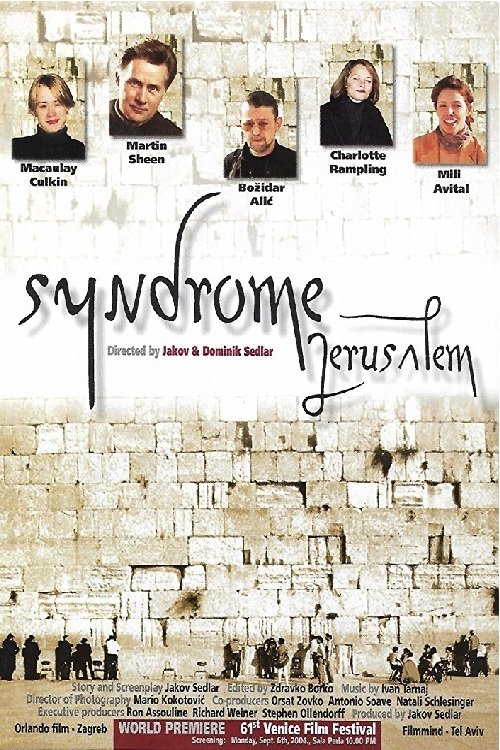
暂无中文简介。

暂无中文简介。