


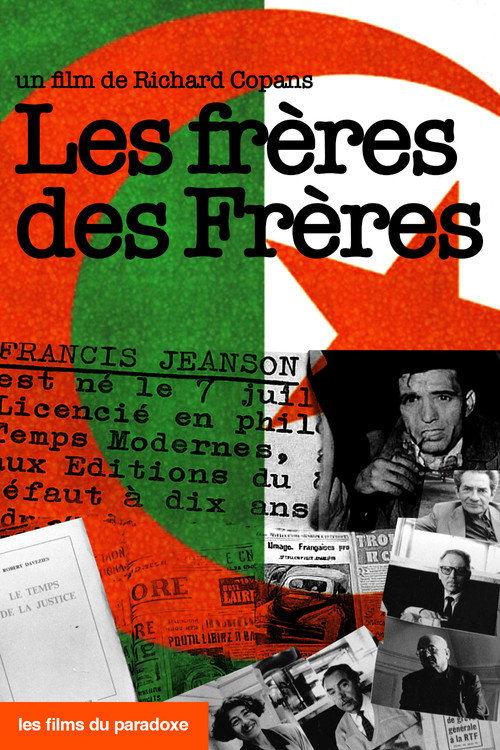
Les frères des Frères
Les frères des Frères暂无中文简介。
输入演员的中文名或英文名,先确认人物,再查看其参演电影(含配音,不含电视剧)。

暂无中文生平,以下显示来源原文。
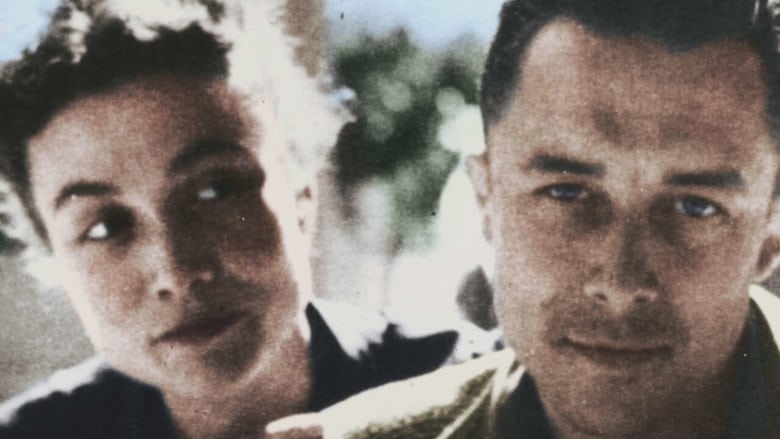
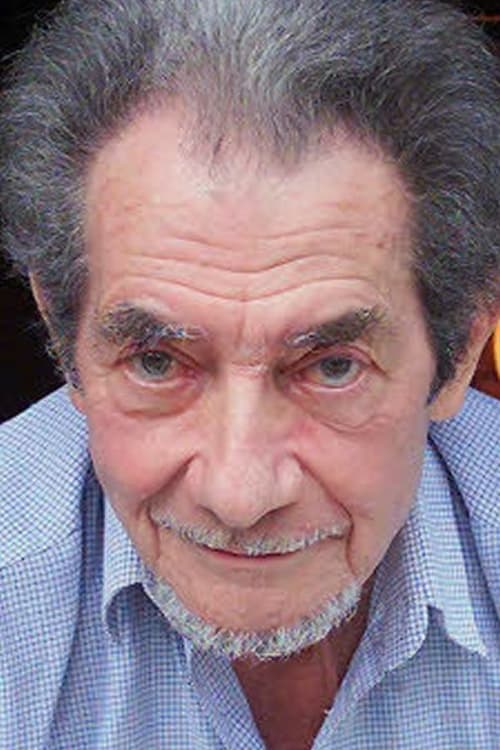
Francis Jeanson, born in Bordeaux on July 7, 1922, and died in Arès on August 1, 2009, was a French philosopher, notably known for his support of the FLN during the Algerian War. During World War II, after studying philosophy at the Faculty of Arts in Bordeaux, he escaped through Spain to avoid forced labor in Germany (STO) and joined the Free French Forces in 1943. A reporter for the newspaper Alger républicain in 1945, he met Albert Camus. Sartre entrusted him with the editorship of the journal Les Temps Modernes from 1951 to 1956. It was Jeanson himself who wrote the review of The Rebel, which definitively soured the relationship between Sartre and Camus. He became friends with Emmanuel Mounier, who in 1948 opened the doors of the journal Esprit to him, a journal then characterized by a certain "pro-communist" stance, and who facilitated his entry into the post-war intellectual circles. Mounier also brought him onto the reading committee of Éditions du Seuil and recommended him to its literary director, Paul Flamand. When Mounier died in March 1950, Albert Béguin, who was preparing the launch of the "Écrivains de Toujours" (Writers of All Time) collection at Seuil, left the publisher for the journal Esprit. Jeanson was chosen to succeed him as head of this popularization series. The ambition to disseminate culture to the widest possible audience would gain momentum thanks to him. Between 1951 and 1956, more than 30 titles appeared in "Écrivains de Toujours". From 1957, at the height of the Algerian War, he put his anti-colonial ideals into practice by creating the Jeanson Network, tasked with transporting funds to the FLN (National Liberation Front). He was then a comrade and partner of Hélène Cuénat. His clandestine network of activists was dismantled in 1960. On October 1, 1960, the verdict in the Jeanson trial was handed down: the harshest sentences were sought against fourteen defendants, including Hélène Cuénat and Francis Jeanson: they were sentenced to ten years in prison, a fine of 70,000 new francs, a five-year banishment, and the deprivation of their civil rights. Having fled abroad, Francis Jeanson was tried in absentia, found guilty of high treason, and sentenced in October 1960 to ten years' imprisonment. He returned to Paris following his amnesty in 1966, then worked with the Théâtre de Bourgogne (directed by Jacques Fornier) and was tasked with developing the cultural policy for the Maison de la Culture in Chalon-sur-Saône (1967-1971). Through this experience, he proposed and elaborated the concept of the "non-public," which was later adopted in May 1968 in the "Villeurbanne Declaration," of which he was the principal author. At the request of psychiatrists, he subsequently led initiatives advocating for an open psychiatry, a "psychiatry of the subject," and notably founded SOFOR (Sud Ouest Formation Recherche), which developed training programs for healthcare professionals. From 1984 to 1987, he served as chairman of the board of directors of the Conservatoire National Supérieur de Musique de Lyon. In 1992, he became president of the Sarajevo Association, in support of the Bosnian people, and ran as a candidate on Professor Leon Schwartzenberg's "Europe begins in Sarajevo" list for the 1994 European elections.
人物资料来源:TMDB从参演电影片单按 TMDB 评分人数选取。
暂无中文简介。
暂无中文简介。

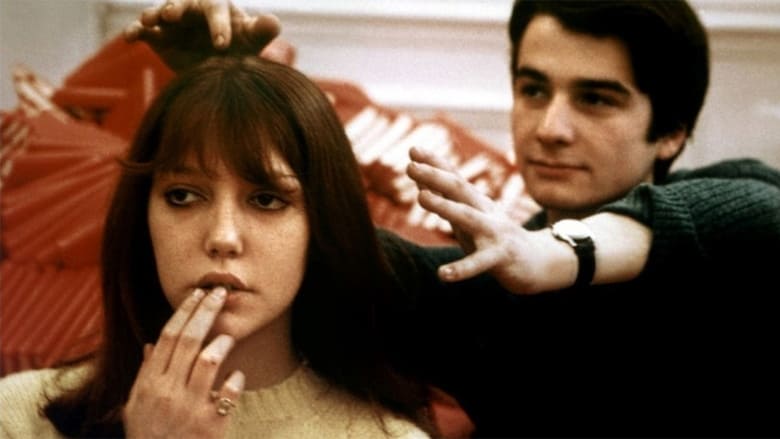
60年代下半期的某一天。巴黎某区。银行家的女儿维络尼卡在一位已同双亲外出度假的女友处借来的住宅里,召开“马列主义共产党”支部会议。房里堆放着一大批小红皮书,墙壁上醒目地挂着一些手写的毛泽东语录。在从北京传来的无线电广播声中,维洛尼卡宣布支部正式成立,并以“阿登-阿拉维亚”的命名,以纪念被法国共产党开除出党的这一同名小说的作者波尔·尼赞。支部成员包括青年演员吉罗姆、女佣人伊沃娜、画家基里洛夫和大学生亨利。维洛尼卡给支部规定的任务是“进行两条战线的斗争”。正值此时,原先缺席的亨利走了进来。他血流满面,是在巴黎大学同法共党员们进行关于中国“文化大革命”的辩论时被打伤的。这使维洛尼卡更有理由宣布她的“路线”的正确性,即不仅不与法国共产党为伍,而且视其为主要敌人…

暂无中文简介。