

Grierson
Grierson暂无中文简介。
输入演员的中文名或英文名,先确认人物,再查看其参演电影(含配音,不含电视剧)。
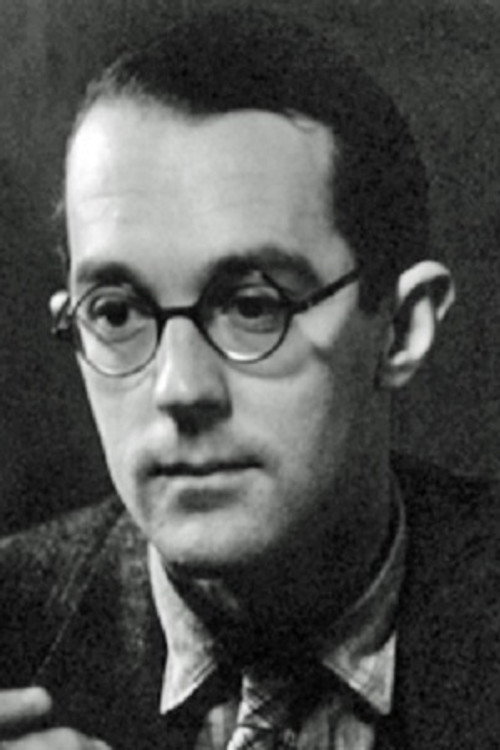
暂无中文生平,以下显示来源原文。
Basil Wright was a documentary filmmaker, film historian, film critic and teacher. During World War II, Wright worked only as a producer, first at John Grierson's Film Centre before joining The Crown Film Unit between 1945 and 1946 as producer-in-charge. Among the best known films he produced for Crown are Humphrey Jennings' A Diary for Timothy (1946) and A Defeated People (1946) and Instruments of the Orchestra (1946) featuring Benjamin Britten's The Young Person's Guide to the Orchestra.[1] Returning to direction in the early 1950s, his films included Waters of Time (1951) made for the Festival of Britain, World Without End (1953) directed with Paul Rotha for UNESCO and Greece: The Immortal Land (1958) in collaboration with his friend the artist Michael Ayrton. Writing throughout the 30s and 40s, Basil Wright had contributed to the theoretical development of documentary in the movement's journals Cinema Quarterly, World Film News and Documentary Newsletter. He was the film critic for The Spectator after Graham Greene left. Wright was a regular contributor to the British Film Institute's Sight and Sound during the 1940s and '50s. He published a small book: The Uses of Film (1948) and his personal (extensive) history of cinema The Long View (1974). He taught at the University of Southern California (1962 and 1968), The National Film and Television School in London (1971–73) and Temple University in Philadelphia (1977–78). He was Governor of the British Film Institute, a fellow of the British Film Academy and President of the International Association of Documentary Filmmakers. In his films Wright combined an ability to look closely and carefully at a subject with a poetic and often experimental approach to editing and sound. In Britain he is commemorated with a film prize awarded biennially by the Royal Anthropological Institute.
人物资料来源:TMDB从参演电影片单按 TMDB 评分人数选取。
暂无中文简介。
暂无中文简介。
暂无中文简介。
暂无中文简介。