


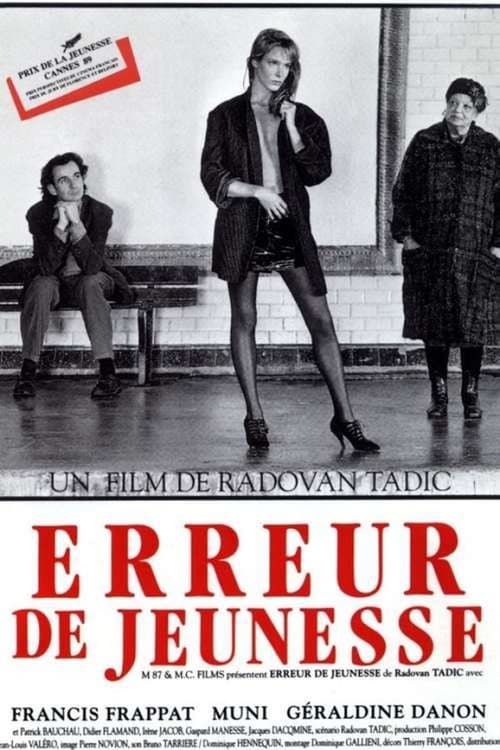
Erreur de Jeunesse
Erreur de Jeunesse暂无中文简介。
输入演员的中文名或英文名,先确认人物,再查看其参演电影(含配音,不含电视剧)。
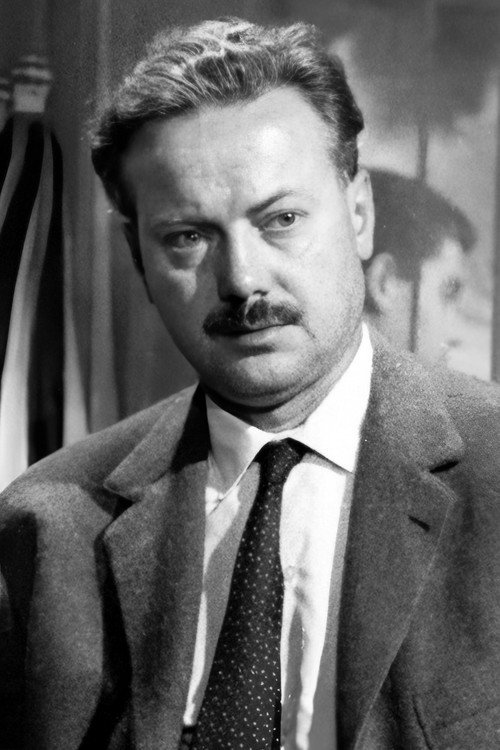
暂无中文生平,以下显示来源原文。
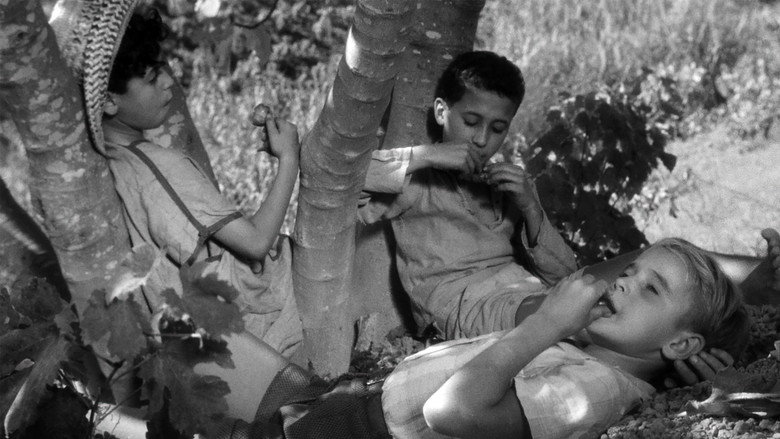
Jean Pélégri (arabic : جان بيليغري), born in Bougara (formerly Rovigo), Algeria, on June 20, 1920, and who died in Paris on September 24, 2003, was a French novelist and poet. A writer and teacher of literature, he was very close to Algerian writers who wrote in French—such as Mourad Bourboune, Jean Sénac, and Mohamed Dib. Beginning in the early 1950s, his work was rooted in the reality of Algeria, straddling his own background—that of the European settlers in Algeria—and the broader Algerian reality: the resistance against colonization, a cause he soon embraced. His body of work reflects this awakening—a commitment to a people who, though exploited, remained combative, and, above all, a commitment to the Algerian land itself, freed from colonialism and envisioned by him as a pluralistic society. His writing, profoundly Algerian, belongs to an experimental "bridging literature"—a body of work forged within the contradictions of colonialism, rich in a combative, popular, and collective plurality. He is best known for *Les Oliviers de la Justice* (The Olive Trees of Justice), which won the *Grand Prix catholique de littérature* in 1960, and *Le Maboul* (1963). Both novels, inspired by the author’s own life, trace Pélégri’s evolving perspective on the politics of the national liberation struggle, the colonial legacy, and, crucially, the nature of Algerian literature. He also served as a screenwriter, dialogue writer, and actor for the film adaptation of *Les Oliviers de la Justice*, directed by James Blue, which won the *Prix des Écrivains de cinéma et de télévision* at the 1962 Cannes Film Festival. Jean Pélégri was also a teacher at the Lycée Buffon (in Paris’s 15th arrondissement), where, in addition to teaching French, he introduced his students to the world of theater. "No other French writer from Algeria—a *pied-noir*, as the term is foolishly used today—has embraced the entirety of Algeria, just as it has always been, in the way he did. Perhaps, at a stretch, one might mention the poet Jean Sénac. But neither Gabriel Audisio, nor Emmanuel Roblès, nor Jules Roy, nor Albert Camus felt—as Jean Pélégri did, with such natural ease—that he was a son of all the Algerias: Arab, Berber, Spanish, and French. From *Les Oliviers de la justice* to *Le Maboul*, he gives voice to a true *cante jondo* of rural Algeria, in all its baroque complexity. *Le Maboul* stands alongside Kateb Yacine’s *Nedjma* as the only Faulknerian novel in our literature." — Jean Daniel, "Pélégri the Algerian," *Le Nouvel Observateur*, Paris, October 8, 2003.
人物资料来源:TMDB从参演电影片单按 TMDB 评分人数选取。
暂无中文简介。

影片以日记的形式呈现。无所事事的年轻人米歇尔(马丁·拉萨尔 Martin LaSalle 饰)在赛马场目睹了一个小偷偷窃的全过程,他被小偷那自信优雅的手法所吸引遂即加入了偷窃的勾当。爱读书,坚持虚无主义哲学思想的米歇尔坚信偷窃是一种手指的芭蕾,一场完美的行窃就像一场精彩的行为艺术。米歇尔有一个久违的病重的母亲,在去探望的时候结识了一直照顾他母亲的邻居珍妮(玛莉卡·格林 Marika Green 饰),漂亮的珍妮唤醒了米歇尔心中沉睡已久的感情。米歇尔被警察盯住了,警长虽然三番五次的给了他改过自新的机会,但米歇尔依旧沉迷于他的“艺术”中无法自拔,很快,米歇尔被捕了。 珍妮来狱中探望米歇尔,她向他袒露了自己的真情,米歇尔在泪水中猛然醒悟,当生命中还有所爱的人存在,生活就不会是一片虚无。

暂无中文简介。
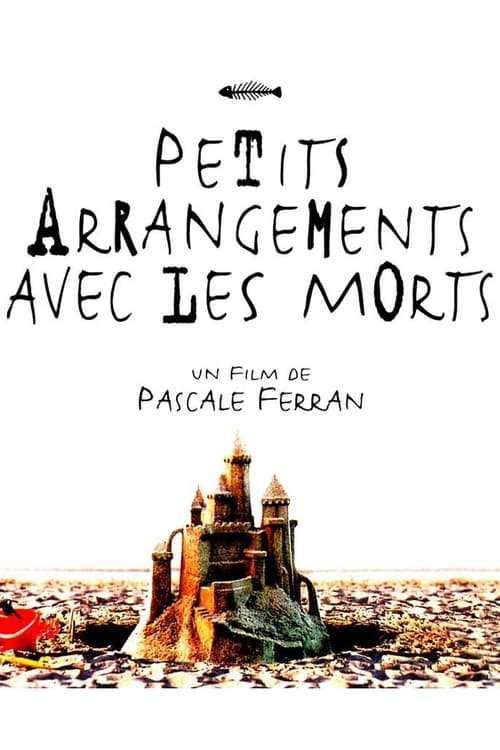
盛夏,布列塔尼的小镇上,一个四十岁的男人在堆建沙堡。在这寂寞的镇上,人们思考死亡和如何活下去……

暂无中文简介。

暂无中文简介。